
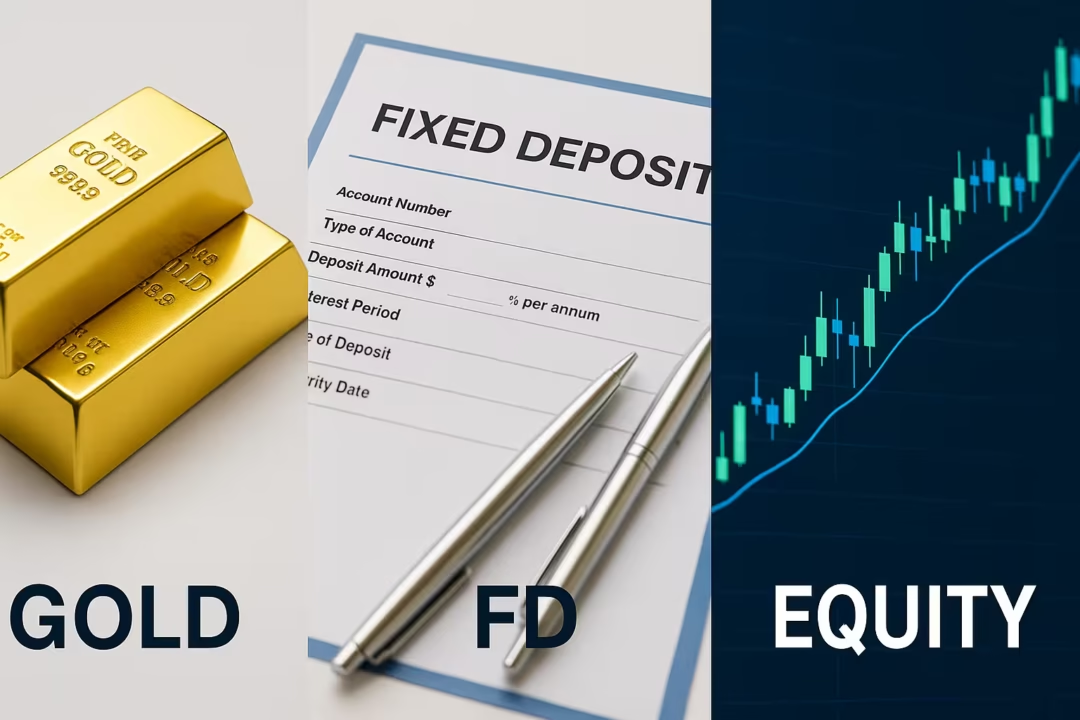
Gold vs FD vs Equity in 2026 – Best Safe Investment?
Introduction (Strong Hook)
When we compare Gold vs FD vs Equity in 2026, the biggest difference is risk appetite and investment duration.Choosing the right investment in 2026 can feel overwhelming, especially when markets fluctuate, inflation rises, and financial uncertainty increases. Most Indian investors traditionally rely on Fixed Deposits (FDs) for safety, Gold for cultural trust, and Equity for long-term growth. But which asset is the best choice in 2026?
The honest answer is: It depends on your goals, risk tolerance, and time horizon.
In this blog, we compare Gold vs FDs vs Equity across returns, risk, liquidity, taxation, inflation protection, and long-term wealth creation — so you can make a smart, informed decision.
Table of Contents
-
What Makes an Investment “Safe”?
-
Overview of Gold as an Investment in 2026
-
Overview of Fixed Deposits in 2026
-
Overview of Equity Investments in 2026
-
Comparison Table: Gold vs FD vs Equity
-
Inflation Impact on All Three
-
Liquidity & Accessibility Comparison
-
Taxation Comparison
-
Real Examples of Returns (Last 10 Years)
-
Expert Investment Strategy for 2026
-
Conclusion – Which One Should You Choose?
-
FAQs
1. What Makes an Investment “Safe”?
A “safe” investment should:
-
Preserve principal amount
-
Provide stable or predictable returns
-
Offer easy liquidity
-
Protect against inflation
But no single investment checks all boxes. This is why diversification matters.
2. Gold vs FD vs Equity in 2026: Understanding Gold as an Investment
Why Indians Prefer Gold
Gold is considered a store of value and a hedge against inflation and market volatility.
Forms of Gold Investment
-
Physical Gold (Jewellery, Coins)
-
Gold ETFs
-
Sovereign Gold Bonds (SGBs)
Expected Returns (2026)
Historically, gold returns in India have averaged:
-
8% – 12% annually (long-term)
Advantages
-
Hedge against inflation
-
Protection during global crisis
-
High cultural acceptance
Disadvantages
-
No monthly or yearly income
-
Physical gold involves storage & making charges
-
Value fluctuates with international market
3. Gold vs FD vs Equity in 2026: Are Fixed Deposits Still Safe?
FDs are preferred for capital safety and predictable income.
Current FD Interest Rates (2026)
| Bank Type | Interest Rate (Approx.) |
|---|---|
| Public Sector Banks | 6% – 7.5% |
| Private Banks | 7% – 8.5% |
| Small Finance Banks | 8% – 9.25% |
Advantages
-
Safe and stable
-
Monthly income option (interest payout)
-
Easy to understand, low risk
Disadvantages
-
Returns often do not beat inflation
-
Tax on interest reduces net gain
-
No long-term wealth growth
4. Gold vs FD vs Equity in 2026: Long-Term Growth Through Equity
Equity represents ownership in companies and includes:
-
Stocks
-
Equity Mutual Funds / SIP
-
Index Funds (Nifty 50, Sensex)
Long-Term Expected Returns
Historically, Equity delivers 12% – 16%+ annually over 7–10 years.
Advantages
-
Best for long-term wealth creation
-
Beats inflation consistently
-
Suitable for retirement planning and passive growth
Disadvantages
-
Short-term volatility
-
Requires patience and discipline
-
Emotional investors may panic in market dips
5. Gold vs FD vs Equity in 2026: Detailed Comparison Table
| Feature | Gold | Fixed Deposit (FD) | Equity |
|---|---|---|---|
| Safety | High | Very High | Moderate (High Long-term) |
| Return Potential | Medium (8-12%) | Low-Medium (6-9%) | High (12-16%+) |
| Liquidity | Medium | High | High |
| Inflation Protection | Yes | No | Yes |
| Risk | Price Volatility | Almost None | Market Volatility |
| Best For | Hedge & diversification | Short-term savings, emergency fund | Long-term wealth building |

Open your Trading & Investment account with Angel One for FREE
You will get:
✅ All trades in Rs.20 💹
✅ Quick SIP in Direct MF
✅ 1Lac MTF @ 0% interest 💰

Groww your wealth Built for a Growwing India
Stocks and Mutual Funds to IPOs, F&O, Bonds, and more.t’s trusted by over 1 crore investors and traders

Open a free demat account with Zerodha
start investing in stocks, derivatives, mutual funds, ETFs, bonds, IPOs, and more
6. Inflation Impact
-
FDs lose value over time because inflation eats returns.
-
Gold and Equity protect purchasing power.
Example: If inflation is 7% and FD returns 6%, your real return = -1%
7. Liquidity Comparison
-
Best Liquidity: FD & Equity
-
Gold is liquid but may involve price cuts / making charges unless digital.
8. Taxation Comparison
| Investment | Tax Rules |
|---|---|
| Gold (Physical/ETF) | Capital gains tax on sale |
| Sovereign Gold Bonds | Tax-free after 8 years (Best form of gold) |
| FD Interest | Fully taxable |
| Equity (Long-term > 1 year)** | 10% LTCG above ₹1 lakh gains |
9. Real Returns Example (Last 10 Years)
| Asset | Average Annual Return |
|---|---|
| Gold | 9% |
| FD | 6.5% |
| Nifty 50 (Equity) | 14% |
Equity has outperformed consistently over the long term.
10. Expert Investment Strategy for 2026
A balanced approach works best:
| Investor Type | Recommended Mix (Gold : FD : Equity) |
|---|---|
| Conservative | 40% FD, 40% Gold, 20% Equity |
| Moderate | 25% FD, 25% Gold, 50% Equity |
| Aggressive | 10% Gold, 10% FD, 80% Equity (SIP/Index Funds) |
Conclusion — Which Should You Choose?
| Goal | Best Option |
|---|---|
| Short-term (0–2 years) | FD |
| Medium-term (2–5 years) | Gold (Prefer SGB) |
| Long-term (5+ years) | Equity (Index + SIP) |
Final Verdict:
-
Use Gold to hedge risk
-
Use FD for safety & emergency fund
-
Use Equity to build real wealth
FAQs
1. Which is safest in 2026?
FD is safest, but may not beat inflation.
2. Which gives best long-term returns?
Equity.
3. Should beginners invest in equity?
Yes — through Index Funds + SIP.
4. Is Gold better than FD?
Yes for inflation protection, no for income generation.
5. Best gold form to invest in?
Sovereign Gold Bonds (SGBs).